India’s premium private school landscape has expanded significantly — and the fees at its top end would be competitive with quality international institutions in many countries. For parents exploring elite schooling options — whether for academic rigour, global curriculum, boarding experience, or university placement outcomes — understanding the fee structures and distinctive offerings of India’s most expensive schools provides an honest framework for the decision.
1. Dhirubhai Ambani International School (DAIS), Mumbai
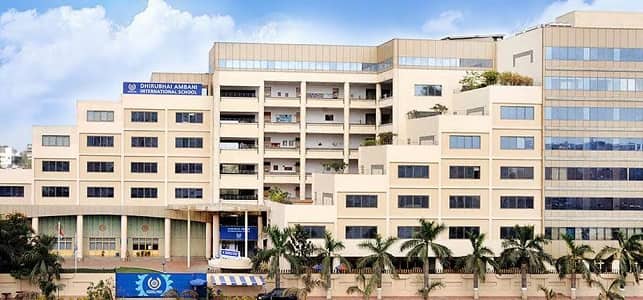
Consistently ranked among India’s most expensive and most academically respected schools, DAIS in Bandra Kurla Complex offers the International Baccalaureate curriculum from the Primary Years Programme through the IB Diploma at the senior secondary level.
Annual fees in 2026 are estimated in the range of ₹5 lakh to ₹9 lakh per year depending on the grade level, with additional charges for activities, transport, and examinations. The school’s IB Diploma results place it consistently among the top IB schools in Asia, and its university placement record includes regular admissions to Oxbridge, Ivy League institutions, and top Asian universities.
The school’s location in Mumbai’s financial district and its industry-connected board make it a preferred choice for business family children seeking global university preparation within India.
2. Ecole Mondiale World School, Mumbai
Ecole Mondiale is one of India’s original IB World Schools and has maintained a reputation for academic excellence and global cultural immersion across its three decades of operation. Annual fees are estimated at ₹5 lakh to ₹8 lakh per year, with IB examination fees additional.
The school’s programme integrates international perspectives into every subject area and its student body draws from expatriate families alongside Indian families with international exposure or ambitions. University placement outcomes are strong — consistent admissions to UK Russell Group and US liberal arts colleges alongside Indian university options.
3. Oberoi International School, Mumbai
Operated by the Oberoi Group — the luxury hospitality organisation — Oberoi International School on the JVLR campus combines IB curriculum delivery with facilities that reflect the group’s characteristic quality standards. Annual fees are estimated between ₹5 lakh and ₹7.5 lakh per year.
The school’s physical infrastructure — science laboratories, performing arts spaces, sports facilities, and library resources — is among the best maintained in India’s private school sector. Its smaller class sizes enable more individualised academic attention than larger schools can consistently provide.
4. The Doon School, Dehradun
The Doon School is India’s most historically prestigious residential school — founded in 1935 and consistently producing alumni who lead India’s government, business, judiciary, and cultural institutions. Annual boarding fees in 2026 are estimated at ₹8 lakh to ₹10 lakh per year, making it among the most expensive boarding schools in the country.
The school follows the CBSE curriculum but its real educational offer extends far beyond the syllabus — debate, model UN, literary societies, environmental programmes, and a house system that builds character alongside academics. The Old Boys network — including numerous cabinet ministers, corporate leaders, and public intellectuals — is among the most influential alumni communities in Asia.
5. Stonehill International Academy, Bengaluru
Stonehill International Academy near Bengaluru offers the IB Diploma Programme alongside the IB Middle Years Programme and has built a strong reputation for individualised learning, university counselling depth, and a values-based school culture.
Annual fees are estimated at ₹6 lakh to ₹8 lakh, with the school’s smaller size — by design — enabling closer student-teacher relationships than Mumbai’s larger international schools. University placements include consistent outcomes at US, UK, Canadian, and Australian institutions. The school draws heavily from Bengaluru’s technology and startup community, with parent backgrounds that bring professional global networks into the school community.
Frequently Asked Questions (FAQs)
Q1. Are IB schools better than CBSE schools for university admissions abroad?
A: IB Diploma holders have a standardised international credential that is directly recognised by universities in over 150 countries — the grading scale and subject depth are familiar to admissions offices in the US, UK, and Europe. CBSE students are increasingly well-recognised abroad with strong marks, but require additional documentation explaining the grading system. For families with a clear plan to send children to international universities, IB provides a more direct pathway. For families who may pursue Indian university admissions through JEE or NEET, CBSE alignment is practically important.
Q2. Do expensive schools produce better academic outcomes than mid-fee private schools?
A: The correlation is real but imperfect. Top fee schools typically offer smaller class sizes, better teacher quality and retention, superior facilities, and stronger university counselling — all of which genuinely improve academic outcomes on average. However, the most important determinant of student achievement remains the student’s own motivation, parental support at home, and the quality of individual teachers — factors that expensive schools improve in probability but don’t guarantee.
Q3. Are there scholarships available at India’s most expensive schools?
A: Most elite schools maintain a small number of merit scholarships or need-based fee concessions — typically covering 10% to 30% of fees rather than full remission. The Doon School has a more established scholarship tradition given its longer history. Families who cannot comfortably afford the full fees without financial strain are generally advised to consider high-quality mid-fee schools where full engagement is financially sustainable rather than straining family finances for school prestige.
Q4. What is the typical teacher-to-student ratio at these schools?
A: Top-fee international schools in India typically maintain ratios of 1:12 to 1:18 — significantly lower than government schools and even many mid-tier private schools. Smaller ratios allow more individualised feedback, differentiated instruction for varied learning paces, and closer mentoring relationships — benefits that become particularly important in the IB Diploma years when independent research and extended essays demand significant teacher guidance.
Q5. How early should parents apply for admissions to these schools?
A: Waiting lists at the most sought-after schools — particularly DAIS, Ecole Mondiale, and The Doon School — can extend two to four years. Applications for nursery or Class 1 admission are sometimes submitted before the child is born for the most competitive schools. For mid-programme entry — Class 6 or 9 — availability depends on seat openings. Contact admissions offices at the earliest point of serious interest — not when the child is approaching the target entry year.