Solar energy has emerged as one of the most transformative and most discussed home improvement investments in India — a country that receives some of the world’s highest average solar irradiation and faces persistent challenges of rising electricity costs, grid reliability issues, and growing environmental consciousness. India’s government has aggressively promoted residential solar adoption through the PM Surya Ghar Muft Bijli Yojana scheme, which provides subsidies of up to ₹78,000 for rooftop solar installations — making 2025 one of the most financially attractive times in Indian history to invest in home solar panels.
But solar panel installation is a significant financial commitment — typically ₹1.5 lakh to ₹4 lakh or more for a standard residential system — and deserves honest evaluation of both its genuine benefits and its real limitations before you commit.
What are Residential Solar Panels?
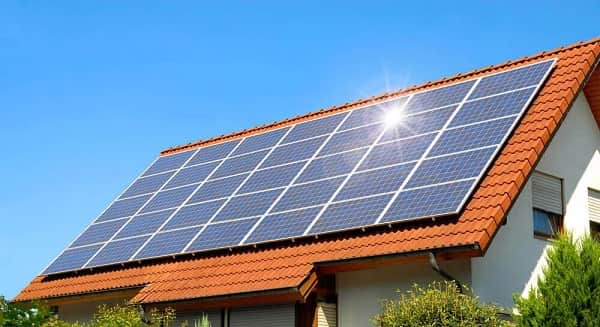
Residential solar panels are photovoltaic (PV) systems installed on rooftops or open land that convert sunlight directly into electricity using semiconductor cells — typically silicon-based. A standard home solar system consists of solar panels, an inverter that converts DC electricity to usable AC power, mounting structures, wiring, and optionally battery storage for off-grid or backup capability. In India, a typical 1 kW system generates approximately 4–5 units of electricity per day under standard conditions, with most residential installations ranging from 2 kW to 10 kW depending on household consumption and available roof space.
Two primary configurations exist — grid-tied systems that feed excess power back to the electricity distribution company under net metering policies, earning credits that reduce electricity bills, and off-grid systems with battery storage that operate independently of the utility grid.
Quick Overview Table — Solar Panels for Homes
| Category | Details |
| Technology | Photovoltaic (PV) panels — silicon semiconductor cells |
| System Types | Grid-tied, Off-grid, Hybrid |
| Standard Home Size | 2 kW to 10 kW depending on usage |
| Daily Generation (1 kW) | 4–5 units in India (average) |
| Installation Cost | ₹50,000–₹60,000 per kW (before subsidy) |
| Government Subsidy | Up to ₹78,000 under PM Surya Ghar Muft Bijli Yojana |
| Payback Period | 4–7 years typically |
| Panel Lifespan | 25–30 years |
| Maintenance | Minimal — periodic cleaning and inspection |
| Best States for Solar | Rajasthan, Gujarat, MP, Maharashtra, Telangana |
| Net Metering | Available in most Indian states |
| CO2 Reduction | Approx. 1.5 tonnes per kW annually |
How Residential Solar Works in India
Under India’s net metering policy available in most states, a grid-tied solar system’s excess electricity production is fed back into the grid through a bidirectional meter. The distribution company credits your account for exported units at a defined rate, which is then offset against units consumed from the grid when solar generation is insufficient — typically at night or on heavily overcast days. This billing mechanism means the grid effectively functions as your battery, eliminating the need for expensive physical battery storage in most urban and semi-urban applications while still dramatically reducing electricity bills.
Advantages of Solar Panels at Home
- Dramatic and Permanent Electricity Bill Reduction: The most compelling and most immediately tangible benefit of home solar installation is the sustained reduction in electricity bills. A well-sized system can reduce monthly electricity bills by 60–90% — with many households effectively eliminating their electricity cost entirely during peak solar generation months. In India where electricity tariffs typically increase 5–8% annually, locking in solar generation at zero variable cost provides compounding financial benefit that grows larger every year. The economic case strengthens consistently as conventional electricity prices rise.
- Excellent Long-Term Return on Investment: With typical payback periods of 4–7 years and panel lifespans of 25–30 years, residential solar installation delivers 18–25 years of essentially free electricity after the initial investment is recovered — an extraordinary return on capital that very few home improvement investments can match. The combination of government subsidies, falling panel prices, and rising grid electricity tariffs has made residential solar one of India’s most financially rewarding long-term household investments.
- Government Subsidies Make It More Affordable: India’s PM Surya Ghar Muft Bijli Yojana provides substantial direct subsidies — covering 40% of the benchmark cost for systems up to 2 kW and 20% for systems between 2–3 kW, with maximum subsidy amounts of ₹78,000 effectively reducing the upfront investment burden significantly. State governments offer additional incentives in many cases, further improving the financial equation for residential adopters.
- Energy Independence and Grid Reliability: Solar panels with battery backup provide genuine energy independence — protecting households from the grid outages, voltage fluctuations, and power cuts that remain common in many Indian cities and towns. For households currently spending significant money on inverter battery replacement cycles, integrating solar charging with existing inverter systems can replace both the grid charging cost and the battery degradation cost simultaneously.
- Environmental Impact — Clean Energy Generation: Each kW of residential solar capacity prevents approximately 1.5 tonnes of CO2 from being emitted annually — replacing coal-fired grid electricity with zero-emission generation that contributes meaningfully to India’s climate commitments. For environmentally conscious households, the ability to directly reduce personal carbon footprint through a visible and permanent home improvement has genuine non-financial value alongside the economic benefits.
- Low Maintenance Requirements: Once installed, solar panels require remarkably little maintenance — primarily periodic cleaning to remove dust and bird droppings that reduce efficiency, and annual inspection of electrical connections and inverter performance. There are no moving parts in standard photovoltaic systems, eliminating mechanical wear and reducing maintenance costs to near zero for the operational lifetime of the installation.
Disadvantages of Solar Panels at Home
- High Upfront Installation Cost: Despite subsidies, a 3 kW residential solar system still typically costs ₹90,000–₹1.5 lakh after government support — a significant capital expenditure that many households cannot easily finance from savings. The payback period of 4–7 years requires patient capital that not all households can commit, and financing through solar loans adds interest costs that extend the effective payback timeline.
- Intermittent Generation — Weather and Seasonal Dependency: Solar panels generate electricity only during daylight hours and produce significantly less in cloudy, monsoon, or heavily polluted conditions. In India’s northern plains where winter fog is dense and monsoon months bring consistently overcast skies, generation can drop 40–60% for extended periods — meaning grid dependency continues even with solar installation and battery backup adds substantial additional cost.
- Roof Space and Structural Requirements: Effective solar installation requires adequate south-facing unshaded roof space — approximately 10 square metres per kW of installed capacity. Apartments in multi-storey buildings face roof access and space allocation challenges that make individual flat-level solar installation impractical without cooperative housing society coordination. Older buildings may also require structural assessment to verify roof load-bearing capacity for panel mounting systems.
- Aesthetic and Architectural Impact: Solar panel installations alter the visual appearance of rooftops in ways that some homeowners and housing societies find architecturally unappealing — particularly in heritage areas, upscale residential complexes, or buildings where rooftop aesthetics are governed by association rules. Housing society permissions can be a significant barrier to installation approval in multi-unit buildings.
- Technology Obsolescence Risk: Solar panel technology continues improving rapidly — more efficient panels, better battery storage, and improved inverter technology mean that a system installed today may be less competitive than systems available in 5–7 years. While existing systems continue functioning effectively, early adopters cannot easily upgrade panel efficiency without complete system replacement, creating an opportunity cost relative to later adopters who benefit from technological improvement.
- Complex Net Metering Bureaucracy: In India, net metering application, approval, and bidirectional meter installation involves interaction with electricity distribution companies whose processes vary by state and are frequently bureaucratically slow — with approval timelines ranging from weeks to months in different regions. The subsidy application process through the PM Surya Ghar portal, while improved, still requires documentation, inspection, and approval steps that require persistent follow-up.
Are Solar Panels Worth It for Indian Homes?
For independent houses with adequate south-facing roof space, consistent electricity bills above ₹2,000 per month, and the financial capacity to manage the initial investment — residential solar installation is one of India’s best-value home improvements in 2026. The combination of government subsidies, rising electricity tariffs, 25+ year panel lifespans, and minimal maintenance creates a compelling long-term financial case that improves with every passing year of electricity price inflation.
Apartment dwellers face structural barriers that make individual installation challenging — collective housing society adoption under group net metering policies is the most viable pathway for multi-unit buildings.
Frequently Asked Questions (FAQs)
Q: How much does a 3 kW solar system cost in India after subsidy?
A: A 3 kW system typically costs ₹1.5 lakh–₹1.8 lakh before subsidy. After PM Surya Ghar scheme benefits, the effective cost reduces to approximately ₹90,000–₹1.2 lakh depending on state.
Q: How many units does a 3 kW solar system generate daily in India?
A: A 3 kW system generates approximately 12–15 units per day under good solar conditions — sufficient for average household consumption of 300–450 units monthly.
Q: Do solar panels work during monsoon season?
A: Yes, but at significantly reduced efficiency — typically 20–40% of peak capacity during heavily overcast monsoon days. Grid connection compensates for shortfall during low generation periods.
Q: What is the lifespan of residential solar panels?
A: Quality solar panels have warranted performance lifespans of 25 years, with gradual efficiency degradation of approximately 0.5–0.7% per year. Most panels continue generating beyond 30 years.
Q: Can apartments install solar panels in India?
A: Individual flat-level installation is challenging. Housing societies can collectively install rooftop systems with shared benefit allocation under group net metering policies available in most states.