Smart home technology has moved from science fiction to everyday reality faster than almost any other consumer technology trend of the past decade. What began as a novelty — voice-controlled speakers and remotely operated lights — has evolved into a comprehensive ecosystem of interconnected devices covering security, energy management, entertainment, appliances, health monitoring, and home automation that millions of Indian and global households are actively integrating into their daily lives. The global smart home market is projected to cross $170 billion by 2025, and India’s rapidly growing middle class with increasing smartphone penetration is driving domestic adoption at an accelerating pace.
But smart homes come with genuine complexity — financial, technical, and privacy-related — that deserves honest evaluation before you commit to building one. The question is not simply whether smart homes are impressive, but whether they are genuinely worth the investment for your specific household’s needs, habits, and priorities.
What is a Smart Home?
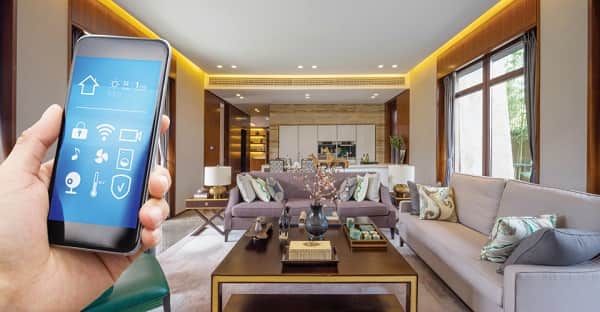
A smart home is a residence equipped with internet-connected devices and automation systems that allow appliances, security systems, lighting, climate control, and entertainment systems to be remotely monitored, controlled, and automated — typically through a smartphone app, voice assistant, or central hub. These devices communicate with each other through Wi-Fi, Zigbee, Z-Wave, or Bluetooth protocols, creating an interconnected ecosystem where a single command or automated trigger can coordinate actions across multiple devices simultaneously.
Common smart home components include smart speakers (Amazon Echo, Google Nest), smart lighting (Philips Hue, Syska), smart security cameras, video doorbells, smart locks, smart thermostats and air conditioners, smart plugs, robotic vacuum cleaners, smart refrigerators, and connected entertainment systems. In India, brands like Xiaomi, Wipro, Havells, and Anchor have launched affordable smart home products that have brought automation within reach of middle-class households beyond just premium segment buyers.
Quick Overview
| Category | Details |
| Technology | IoT (Internet of Things) connected devices |
| Control Methods | Smartphone app, voice assistant, automation schedules |
| Major Ecosystems | Amazon Alexa, Google Home, Apple HomeKit |
| Indian Brands | Xiaomi, Wipro, Syska, Havells, Anchor |
| Entry Level Cost | ₹5,000–₹20,000 (basic setup) |
| Full Home Cost | ₹1 lakh–₹10 lakh+ depending on scale |
| Key Benefits | Convenience, energy savings, security, accessibility |
| Key Concerns | Privacy, cybersecurity, cost, technical complexity |
| Internet Requirement | Yes — constant connectivity needed |
| Best For | Tech-savvy households, energy-conscious users |
| Compatibility Issue | Devices from different brands may not integrate seamlessly |
| Market Growth | Global smart home market crossing $170 billion by 2025 |
How Smart Home Technology Works
Smart home devices connect to your home Wi-Fi network and communicate with each other and with cloud servers through the Internet of Things (IoT) framework. A central hub or ecosystem — such as Amazon Alexa, Google Home, or Apple HomeKit — acts as the coordinator, enabling devices from multiple manufacturers to work together under unified control. Voice commands through smart speakers, timed automations, location-based triggers (geofencing), and sensor-based responses allow the home environment to respond intelligently to resident behaviour and preferences.
In India, reliable broadband internet is the foundation requirement — meaning households in areas with inconsistent connectivity face reliability challenges that limit the practical benefits of smart home investments.
Advantages of Smart Home Technology
- Unmatched Convenience and Remote Control: The most immediate and universally appreciated benefit of a smart home is the convenience of controlling your entire home environment from your smartphone — from anywhere in the world. Forgot to turn off the AC before leaving for work? Unlock the door remotely for a family member who forgot keys? Check if you left a gas appliance on? Smart homes eliminate the anxiety and inconvenience of these common situations through instant remote access. Voice commands through smart speakers further reduce friction — dimming lights, adjusting fan speed, or playing music without physically moving creates a genuinely seamless living experience that becomes habitual quickly.
- Significant Energy Efficiency and Cost Savings: Smart thermostats, smart ACs, and smart lighting systems can substantially reduce household electricity consumption by automatically adjusting operation based on occupancy, time of day, and user preferences. Smart plugs can cut standby power consumption by completely switching off devices when not in use. Smart meters provide real-time visibility into electricity consumption by appliance — helping households identify and eliminate energy waste. Over time, these savings genuinely offset smart device purchase costs, making energy management one of the most financially compelling arguments for smart home adoption particularly in India where electricity costs are rising consistently.
- Enhanced Home Security: Smart security cameras, video doorbells, smart locks, and motion sensors create a comprehensive home security ecosystem that traditional alarm systems cannot match in intelligence and responsiveness. Real-time video surveillance from anywhere, instant motion detection alerts on your smartphone, facial recognition at the door, and remote door locking provide security layers that give homeowners genuine peace of mind. For households where parents need to monitor children arriving home from school, elderly family members living independently, or properties left unoccupied during travel, smart security adds protection value that justifies the investment independently of all other benefits.
- Improved Accessibility for Elderly and Differently-Abled: Voice-controlled smart home devices represent a transformative quality-of-life improvement for elderly residents and people with physical disabilities or mobility limitations. Turning on lights, unlocking doors, adjusting temperature, operating appliances, and making phone calls through voice commands eliminates the physical effort and movement that these activities require — enabling more independent living for family members who benefit from reduced physical demands. This accessibility benefit makes smart home investment genuinely meaningful for multigenerational Indian households where caring for elderly parents is a common living arrangement.
- Smart Automation — Home That Works for You: Beyond remote control, true smart home capability lies in automation — your home responding intelligently to circumstances without requiring manual input. Morning routines that automatically raise blinds, brew coffee, and play news at your wake-up time. Security lights that activate when motion is detected at night. AC that adjusts before you arrive home based on your phone’s location. These automated sequences eliminate repeated manual actions from daily life — creating genuine time savings and the comfortable feeling that your home is actively working in your service rather than being a passive environment you manage.
- Entertainment and Ecosystem Integration: Smart home entertainment ecosystems — connected TVs, multi-room audio, integrated streaming services, and voice-controlled home theatre — create entertainment experiences that traditional wired setups cannot match for convenience and quality. The ability to seamlessly move music from room to room, control an entire home cinema through voice, and integrate entertainment with lighting and ambience creates a premium living experience that enhances daily quality of life significantly.
Disadvantages of Smart Home Technology
- High Initial Investment Cost: Building a genuinely functional smart home ecosystem requires significant upfront financial investment that puts it beyond reach for many Indian households. A basic smart security camera costs ₹2,000–₹5,000, smart lights ₹500–₹2,000 per bulb, smart locks ₹5,000–₹15,000, smart speakers ₹3,000–₹10,000, and smart ACs or thermostats ₹10,000–₹30,000 — equipping even a 2BHK apartment comprehensively can easily cost ₹50,000 to ₹2 lakh or more. The return on investment through energy savings takes years to realise, and many devices require paid subscription services for cloud storage, premium features, or professional monitoring that add ongoing costs.
- Privacy and Data Security Risks: Smart home devices continuously collect data about your behaviour, routines, conversations, and home activities — sending this data to cloud servers operated by technology companies whose data practices vary significantly. Smart speakers are always listening for wake words. Security cameras record your daily movements. Smart appliances track usage patterns. This pervasive data collection creates genuine privacy concerns about who has access to intimate details of your home life, how this data is used for advertising or sold to third parties, and what happens to years of collected behavioural data if the company is acquired or ceases operations. For Indian consumers, robust data privacy legislation is still developing — making individual informed consent and careful device selection critically important.
- Cybersecurity Vulnerabilities: Every internet-connected device in your home is a potential entry point for cybercriminals. Poorly secured smart devices — particularly budget products with inadequate security protocols — can be hacked to access your home network, disable security systems, unlock doors, or serve as entry points for larger cyber attacks. Smart home device manufacturers vary enormously in their security update practices — some abandon older devices without security patches, leaving them permanently vulnerable. A compromised smart lock or security camera represents not just a digital security failure but a physical safety risk that traditional security systems do not face.
- Reliability and Internet Dependency: Smart home functionality depends entirely on stable internet connectivity — and in India where broadband reliability varies significantly by city and neighbourhood, this creates practical reliability concerns. During internet outages, many smart devices become completely non-functional — smart lights that cannot be manually overridden, smart locks that cannot be opened without network connection, and smart appliances that display error messages instead of operating. This single point of failure vulnerability is a fundamental weakness that conventional home systems do not share, and it can create genuine inconvenience at precisely the moments when reliability matters most.
- Compatibility and Ecosystem Fragmentation: Smart home devices from different manufacturers often use different protocols — Zigbee, Z-Wave, Wi-Fi, Bluetooth — and different app ecosystems — Amazon Alexa, Google Home, Apple HomeKit — that do not always communicate seamlessly with each other. Building a cohesive smart home from devices across multiple brands frequently requires technical troubleshooting, additional hubs, and acceptance that some devices will not integrate with your primary ecosystem. This fragmentation makes smart home setup more technically demanding than product marketing suggests, and it creates the frustrating experience of managing multiple separate apps rather than a genuinely unified home control interface.
- Technical Complexity and Maintenance: Smart home systems require ongoing technical maintenance that traditional home systems do not — software updates, app updates, Wi-Fi network management, device resets, and troubleshooting that non-technical users find overwhelming. When a device stops responding, determining whether the problem is the device itself, the app, the Wi-Fi network, the cloud server, or a software incompatibility requires a level of technical debugging that many households — particularly those with elderly members — cannot independently manage.
- Obsolescence Risk: Smart home technology evolves rapidly — devices purchased today may become incompatible with updated ecosystems in 3–5 years as protocols change and manufacturers discontinue support for older products. Unlike a traditional light switch that functions identically for decades, a smart device tied to a cloud service or specific app version can become functionally obsolete when the manufacturer stops supporting it — creating a replacement cost cycle that traditional home infrastructure does not impose.
Are Smart Homes Worth It?
Smart home technology delivers genuine and meaningful benefits when adopted thoughtfully — prioritising devices that solve specific problems rather than buying comprehensively for novelty. Energy management, security, and accessibility for elderly family members provide concrete and measurable value that justifies investment. The convenience and automation benefits genuinely improve daily quality of life for households that adopt them consistently.
The privacy, security, and reliability risks are real and should be addressed through careful device selection, strong Wi-Fi passwords, regular security updates, and choosing established brands with demonstrable security practices over cheap budget alternatives. Starting with a few high-impact devices — a smart speaker, smart security camera, and smart AC controller — before committing to comprehensive ecosystem investment is the most financially prudent approach for most Indian households.
Frequently Asked Questions (FAQs)
Q: What is the minimum budget to start a smart home in India?
A: A basic smart home setup — smart speaker, 1–2 smart bulbs, and a smart plug — can be started for ₹5,000–₹10,000. A comprehensive smart home covering security, lighting, and climate typically costs ₹50,000–₹2 lakh depending on home size.
Q: Are smart home devices safe from hackers?
A: Security quality varies significantly by brand and product. Using established brands, keeping firmware updated, using strong Wi-Fi passwords, and enabling two-factor authentication on smart home apps significantly reduces but does not eliminate cybersecurity risks.
Q: Do smart home devices work without internet?
A: Most smart home devices require internet connectivity for remote control, voice commands, and cloud features. Some devices retain basic local functionality without internet, but advanced features typically require active connectivity.
Q: Which smart home ecosystem is best for India?
A: Amazon Alexa and Google Home both have strong device compatibility in India. Google Home integrates well with Android smartphones which dominate India’s market. Alexa has a wider range of compatible Indian smart home brands.
Q: Can smart homes save electricity bills?
A: Yes — smart thermostats, smart ACs, smart lighting, and smart plugs that eliminate standby power can meaningfully reduce electricity consumption. Energy savings typically range from 15–30% depending on usage patterns and device selection.