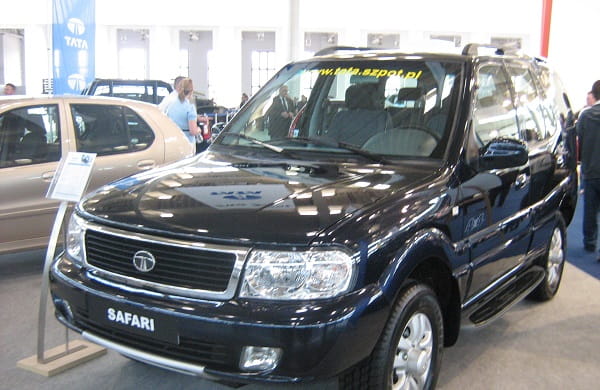
The Tata Safari nameplate is one of the most emotionally charged in Indian automotive history. The original Safari launched in 1998 as India’s first homegrown SUV with genuine off-road pretensions — a vehicle that defined an era of road tripping, adventure, and aspiration for an entire generation. The second-generation Safari that arrived in 2021 made a dramatic pivot — abandoning body-on-frame construction for Tata’s Land Rover-derived OMEGARC monocoque platform, gaining a completely transformed interior, and shifting its identity from rugged workhorse to premium family SUV. By 2026, the Safari has matured further, earning both a 5-star Bharat NCAP and 5-star Global NCAP crash safety rating, adding a top-spec Ultra trim in May 2026, and building toward a Safari EV launch in the festive season of 2026 — making it one of the most comprehensively evolved SUVs in its class.
Safari Variants and Price Range
The 2026 Tata Safari is available in 45 variants across multiple trims — Pure, Smart, Adventure, Accomplished, Adventure Plus, Accomplished Plus, and the newly added Ultra — in both six-seat and seven-seat configurations, with manual and automatic transmission choices. Ex-showroom prices start from Rs. 13.29 lakh for the base Pure diesel manual and extend to Rs. 26.39 lakh for the top diesel automatic variant, with the new Accomplished Ultra trim starting at Rs. 24.49 lakh. On-road prices in Delhi begin at approximately Rs. 15.37 lakh and can exceed Rs. 30 lakh for the fully loaded automatic top variants. A Safari EV is expected to launch in India’s festive season 2026, anticipated to start at approximately Rs. 22.5 lakh — marking the nameplate’s first electric chapter.
Engine Options and Performance
The Safari is powered exclusively by a single powertrain option — a 2.0-litre Kryotec turbocharged diesel four-cylinder engine producing 170 bhp and 350 Nm. It is paired with either a 6-speed manual gearbox or a 6-speed torque-converter automatic, both in a front-wheel-drive configuration. A petrol engine option was added to the lineup in late 2025 as a separate variant, though diesel remains overwhelmingly the dominant choice for the Safari buyer profile. The diesel engine’s character is strong and assured — abundant torque from low revs that makes the Safari feel effortless when carrying six or seven occupants over long highway distances. The absence of a 4×4 drivetrain is the most commonly cited limitation, but it reflects the reality that the current Safari is positioned as a family road tripper rather than an off-road adventurer.
Features
The Safari’s cabin is its strongest selling argument in 2026. The 12.3-inch touchscreen infotainment system with wireless Android Auto and Apple CarPlay is complemented by a 10.25-inch digital driver’s display — a dual-screen setup that rivals products costing significantly more. The top Ultra variant adds a 14.5-inch Samsung OLED touchscreen. A panoramic sunroof, powered front seats with an electronic Boss Mode on the co-driver’s seat, ventilated and heated front seats, a JBL premium sound system, ambient lighting, wireless charging, and a 360-degree camera feature on higher variants.
Safety is genuinely exceptional and represents one of the Safari’s most powerful differentiators. Five-star ratings from both Bharat NCAP and Global NCAP confirm structural protection at the highest level. Level 2 ADAS on Accomplished and higher variants includes autonomous emergency braking, adaptive cruise control, lane keep assist, lane departure warning, blind spot monitoring, and traffic sign recognition — calibrated specifically for Indian road conditions and traffic patterns. Seven airbags are available across multiple variants. The OMEGARC platform’s Land Rover-derived architecture gives the Safari’s structural integrity a pedigree that no other car in its price segment can match.
The Safari’s design evolution has been striking. Its bold front fascia, sculpted bonnet, LED projector headlamps, and generous wheel arch cladding give it a commanding road presence. Available in 14 colour options including multiple dual-tone combinations, it offers genuine visual variety for a premium family SUV at this price point.
Mileage
The Safari’s diesel delivers an ARAI-certified mileage of 14.72 to 16.3 kmpl — the manual returning higher numbers than the automatic. Real-world figures in city traffic typically land at 11 to 13 kmpl, improving to 15 to 16 kmpl on steady highway cruising. Experienced Safari owners on long-distance runs on expressways at controlled speeds have reported figures approaching 18 to 19 kmpl under optimal conditions. For a large three-row diesel SUV of this size and capability, these figures represent a competitive position in the segment, though buyers seeking maximum fuel economy in a three-row format would find the hybrid variants of the Toyota Innova Hycross more frugal.
FAQs
Q: What is the starting price of the Tata Safari in 2026?
A: The Safari starts at Rs. 13.29 lakh ex-showroom for the base Pure diesel manual, going up to Rs. 26.39 lakh for the top diesel automatic. The new Ultra trim starts at Rs. 24.49 lakh.
Q: Does the Safari have a petrol engine option?
A: Yes — a petrol variant was added to the Safari lineup in late 2025, though the 2.0-litre diesel remains the dominant and most widely chosen powertrain.
Q: What safety rating has the Tata Safari received?
A: The Safari holds a 5-star rating from both Bharat NCAP and Global NCAP — the highest safety credential available from both Indian and global crash test programmes.
Q: Is the Safari available in 4×4?
A: No — the current diesel and petrol Safari variants are front-wheel drive only. A 4×4 configuration is not currently offered in this generation.
Q: When is the Tata Safari EV expected to launch?
A: The Safari EV is expected to launch during India’s festive season of 2026, anticipated to start at approximately Rs. 22.5 lakh and share its platform with the Tata Harrier EV.