After years of speculation, import duty negotiations, and false starts spanning nearly a decade, Tesla finally arrived in India in July 2025 — and the manner of its arrival was quintessentially Tesla: no distributor, no traditional dealership network, a direct-to-consumer sales model through a company-owned showroom in Mumbai, and a single vehicle to start with. That first offering was the Model Y, the world’s best-selling electric vehicle, and it landed in India at a price that positioned it firmly in the premium EV segment competing against the likes of the BMW iX1, Mercedes-Benz EQB, and Volvo XC40 Recharge. By 2026, Tesla has expanded to a second showroom at Aerocity in Delhi, has introduced the six-seat Model Y Long variant, and has the Model 3 sedan deep in homologation for an imminent Indian launch.
India’s automotive market has been waiting for this moment not just for the product but for what Tesla represents — the legitimisation of premium EV ownership as a mainstream aspiration rather than a niche technology statement.
Tesla India 2026 — Models and Price Range
The Tesla Model Y is the primary model available in India across two variants. The base Model Y RWD is priced at Rs. 59.89 lakh ex-showroom, while the Model Y Long Range RWD sits at Rs. 67.89 lakh ex-showroom. The Tesla Model Y L — a six-seat long wheelbase variant introduced in April 2026 — is priced at Rs. 61.99 lakh ex-showroom, with on-road prices in Maharashtra starting at Rs. 63.12 lakh. In Delhi, on-road prices for the standard Model Y range from Rs. 63.34 lakh to Rs. 71.78 lakh.
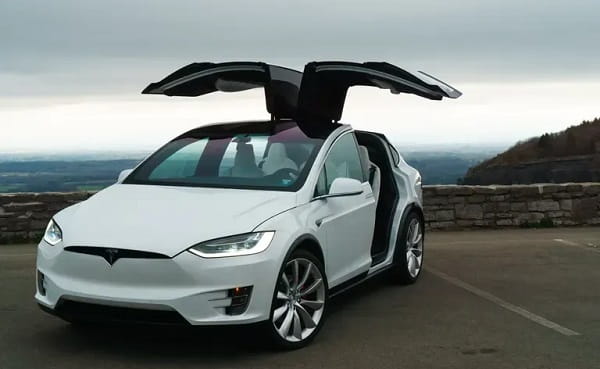
The pricing advantages of buying a Tesla in India are meaningful in one specific way — all Tesla EVs attract only 5 percent GST compared to 28 percent plus cess on conventional luxury petrol and diesel vehicles. Combined with registration tax exemptions in EV-friendly states like Maharashtra, Delhi, and Karnataka, the effective on-road price gap between a Tesla and a comparable German luxury SUV narrows considerably. The Model 3 sedan is expected to follow in India in 2026 at a price range of approximately Rs. 45 to 60 lakh, bringing Tesla’s entry price point meaningfully lower and opening the brand to a wider buyer base. The Tesla Model S and Model X are expected subsequently.
Features
Tesla’s technology advantage over conventional luxury cars is most visible inside the cabin. The Model Y features a 15.4-inch central touchscreen that controls virtually every vehicle function — climate, navigation, media, driver assistance settings, charging management, and entertainment — through a clean, minimal interface that updates continuously via over-the-air software upgrades. Unlike traditional automotive infotainment systems that age quickly and require dealer visits for updates, the Tesla’s software genuinely improves over time, adding new features and refining existing ones without requiring the owner to do anything. A rear passenger screen adds entertainment capability for occupants in the back rows.
The Model Y comes with ventilated and heated front seats, a panoramic glass roof, auto-dimming mirrors, Tesla’s Autopilot advanced driver assistance suite as standard, and Full Self-Driving hardware capability in the vehicle’s silicon and cameras. Autopilot handles lane centring, traffic-aware cruise control, and automated lane changes on supported highways. The sound insulation and cabin refinement are exceptional — the absence of an engine means road and wind noise become the dominant acoustic inputs, and Tesla has engineered both down to a very low level. Colour options include Stealth Grey, Pearl White Multi Coat, Diamond Black, Glacier Blue, Quicksilver, and Ultra Red — most colours carrying a premium over the base grey.
Safety is a consistent Tesla strength globally. The Model Y L received a full five-star rating in ANCAP crash tests, a result that extends to the standard two-row Model Y. Multiple airbags, pre-collision warning, automatic emergency braking, side collision avoidance, and a rigid aluminium and steel body structure underpin these numbers.
Range
Tesla communicates its vehicles’ efficiency in terms of range per charge rather than kmpl, which is the appropriate metric for EVs. The Model Y RWD delivers a WLTP-certified range of approximately 500 km on a single charge. The Model Y Long Range RWD extends this to 661 km under WLTP testing — enough to cover Delhi to Chandigarh and back on a single charge with range to spare. Real-world range in Indian conditions — accounting for high temperatures, air conditioning use, and mixed urban-highway driving — typically delivers 400 to 500 km from the long range variant. Tesla’s Supercharger network, currently under rapid expansion in India, provides fast DC charging that can add approximately 200 km of range in under 20 minutes at a dedicated V3 Supercharger station.
FAQs
Q: What is the starting price of the Tesla Model Y in India in 2026?
A: The Tesla Model Y starts at Rs. 59.89 lakh ex-showroom for the base RWD variant, with the Long Range RWD at Rs. 67.89 lakh and the six-seat Model Y L at Rs. 61.99 lakh.
Q: Is Tesla directly sold without dealerships in India?
A: Yes — Tesla operates an entirely direct-to-consumer model in India with company-owned showrooms in Mumbai and Delhi. There are no third-party dealer franchises.
Q: What is the Tesla Model Y’s range on a single charge?
A: The base Model Y RWD offers approximately 500 km WLTP range. The Long Range RWD extends this to 661 km under WLTP testing.
Q: Which Tesla models are expected in India after the Model Y?
A: The Model 3 sedan is in homologation and expected to launch in 2026. The Model S, Model X, and Cybertruck are further down the pipeline.
Q: What GST rate applies to Tesla cars in India?
A: Tesla EVs attract 5 percent GST — dramatically lower than the 28 percent plus cess applicable to conventional luxury petrol and diesel vehicles, making their effective pricing more competitive than the ex-showroom figure alone suggests.