Japanese cuisine has arrived in India with remarkable momentum over the past decade — transforming from a niche diplomatic and expat dining preference into a mainstream urban food culture that young Indian professionals, food enthusiasts, and health-conscious consumers are embracing with genuine enthusiasm. The growth of Japanese restaurants across India’s metropolitan cities, the explosion of sushi and ramen availability at everything from standalone specialist restaurants to mall food courts, and the rising influence of Japanese food aesthetics — minimalist presentation, premium ingredients, umami-forward flavour profiles — on India’s broader food scene reflects a deeper shift in how urban Indians approach dining.
Japanese food’s appeal in India rests on a combination of factors that align surprisingly well with emerging Indian consumer preferences — the health-conscious profile of a cuisine traditionally associated with Japan’s extraordinary longevity statistics, the visual artistry that makes Japanese food experiences Instagram-worthy, the umami depth that satisfies without heaviness, and the novelty factor that positions Japanese dining as aspirational and sophisticated in India’s rapidly evolving restaurant culture.
| Dish | Original Japanese Name | Primary Flavour | Served As | Popularity Level |
| Sushi | 寿司 | Fresh, mild, umami | Starter / Main | Very High |
| Ramen | ラーメン | Rich, savoury, complex broth | Main course | High |
| Tempura | 天ぷら | Light, crispy, delicate | Starter / Side | High |
| Edamame | 枝豆 | Fresh, nutty, subtly salted | Snack / Appetiser | Very High |
| Matcha Desserts | 抹茶 | Earthy, bitter-sweet | Dessert / Beverage | Very High |
1. Sushi — Japan’s Most Recognised Ambassador to India
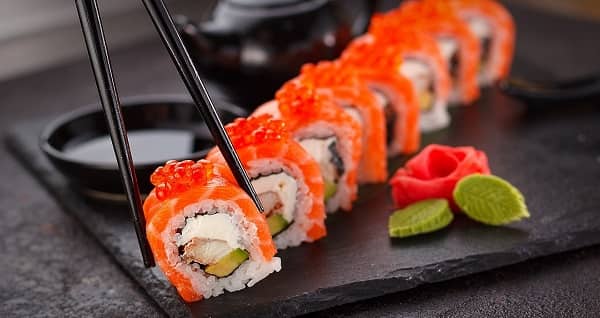
Sushi is the dish that opened India’s relationship with Japanese cuisine — the product that first appeared on Delhi and Mumbai hotel menus in the 1990s catering to Japanese business delegations and has since become the defining symbol of Japanese food culture for Indian consumers across urban centres. From its initial association with luxury and exclusivity, sushi has progressively democratised — available today at standalone sushi restaurants, conveyor belt sushi bars, Japanese fast casual chains, hotel all-day dining menus, and home delivery platforms across Bangalore, Mumbai, Delhi, Hyderabad, and Pune.
Sushi’s Indian popularity journey is itself a fascinating story of consumer education and cultural adaptation. The first challenge was overcoming the raw fish hesitation that most Indian consumers understandably felt — a cuisine tradition with no cultural precedent for raw seafood consumption encountering a population that overwhelmingly prefers cooked food. The food industry’s response was gradual and intelligent — introducing vegetarian and cooked seafood sushi options that allowed Indian consumers to engage with the format, technique, and presentation of sushi without confronting the raw fish challenge at the outset.
Vegetarian sushi rolls — featuring avocado, cucumber, cream cheese, mango, and pickled vegetables — became India’s gateway sushi product, allowing consumers to appreciate the vinegared rice, nori seaweed wrapping, and the careful rolling technique without the rawness barrier. As familiarity grew through vegetarian entry points, salmon sashimi, tuna rolls, and prawn nigiri progressively became mainstream choices for more adventurous Indian diners.
The visual drama of sushi — its meticulous geometric presentation, the vibrant colour contrast between rice and ingredients, the edible art quality of well-made nigiri and maki — aligns perfectly with India’s growing food photography culture, making sushi one of the most-shared food experiences on Indian social media. A beautifully presented sushi platter at a premium Japanese restaurant generates more Instagram engagement than almost any other cuisine’s equivalent offering — driving aspirational dining motivation that extends well beyond pure flavour preferences.
The adaptation of sushi for Indian palates has produced fascinating local variations — spicy Indian-style rolls incorporating green chilli, chaat masala-influenced accompaniments alongside traditional wasabi and soy sauce, and fusion rolls with distinctly Indian ingredient combinations that purist Japanese chefs would find unrecognisable but Indian consumers find irresistibly appealing.
2. Ramen — Japan’s Soul Food Finds Indian Fans
Ramen has experienced a remarkable rise in Indian popularity over the past five years — driven by a combination of anime and Japanese pop culture influence among India’s younger consumers, the growing number of dedicated ramen restaurants in metropolitan cities, and the recognition that a perfectly made bowl of ramen delivers one of the world’s most deeply satisfying and complex eating experiences. Ramen’s progression from a niche interest among Japan enthusiasts to a mainstream dining destination represents Japanese cuisine’s deepening roots in Indian urban food culture.
A proper ramen bowl is a study in culinary precision — the broth alone requires 12–24 hours of careful simmering with bones, vegetables, and aromatics that build a depth of umami flavour that quick cooking cannot achieve. The four primary ramen broth styles — Shoyu (soy sauce-based, clear and savoury), Miso (fermented soybean paste creating rich, complex depth), Tonkotsu (pork bone-based, creamy and intensely rich), and Shio (salt-based, delicately clear) — each deliver a completely different flavour experience from the same fundamental noodle format.
India’s ramen scene has made thoughtful adaptations for the large vegetarian Indian consumer base — mushroom-based tashi broths, vegetable tonkotsu-style preparations using roasted vegetables and coconut milk to approximate the creaminess of pork-based originals, and egg-centric ramen bowls for those who avoid meat but eat eggs. The result is a ramen ecosystem in Indian cities that accommodates dietary preferences without sacrificing the fundamental quality of a properly made, flavourful broth.
The ramen experience’s interactive, customisable nature — choosing broth style, noodle firmness, toppings including ajitama (soft-boiled marinated egg), chashu pork or tofu, nori, bamboo shoots, and corn — creates the engagement and personalization that Indian consumers increasingly seek from premium dining experiences. Major Japanese ramen chains have identified India as an emerging market, and the infrastructure of dedicated ramen restaurants in Bangalore, Mumbai, and Delhi is expanding rapidly.
3. Tempura — Light, Crispy Perfection
Tempura has won Indian hearts through a combination of familiar format — battered and fried food being universally beloved across Indian cuisine traditions — and the completely distinctive lightness of the authentic Japanese preparation that differs dramatically from India’s heavier pakora and bajji frying traditions. The genius of tempura lies in its batter — a minimally mixed combination of ice-cold water and flour that deliberately retains lumps and is used immediately, creating a delicate, lacey, almost transparent coating that fries to an ethereal crispness without the heavy, doughy quality that overworked batters produce.
Prawn tempura is the most popular Japanese tempura variant in India — the naturally sweet, firm texture of fresh prawns combined with the light tempura batter creates a contrast of flavours and textures that non-vegetarian Indian diners consistently rank among their favourite Japanese dishes. Served with tentsuyu dipping sauce — a delicate broth of dashi, mirin, and soy sauce — alongside grated daikon radish that cuts through the fried richness, prawn tempura represents Japanese cooking philosophy at its most elegantly simple.
Vegetable tempura — featuring sweet potato, lotus root, shiitake mushroom, aubergine, and shishito pepper — has developed significant popularity among India’s vegetarian population, who appreciate both the lightness of the preparation and the way tempura treatment elevates vegetables to star-ingredient status rather than treating them as secondary components.
Tempura’s presence in India extends beyond dedicated Japanese restaurants into the broader fusion cuisine scene — tempura prawns appear as starters at pan-Asian restaurants, tempura-battered sushi rolls have become a popular fusion format, and tempura vegetables feature in fusion bento boxes that combine Japanese and other Asian cuisines.
4. Edamame — Japan’s Most Loved Snack Takes India By Storm
Edamame — young soybeans harvested while still in the pod, briefly boiled or steamed and served with a simple salt seasoning — has achieved a popularity in Indian urban dining that seems disproportionate to its complete simplicity. Young, health-conscious Indian urban professionals have embraced edamame with an enthusiasm that reflects several converging trends — the growing preference for plant-based, high-protein snacks; the appeal of minimally processed foods; and the snacking format’s compatibility with the sharing plates culture that defines modern Indian restaurant dining.
Edamame’s nutritional profile drives significant appeal among India’s fitness-conscious urban demographic — rich in plant protein, dietary fibre, vitamins K and C, folate, and manganese, with a complete amino acid profile that most plant foods lack. A 100-gram serving of edamame provides approximately 11 grams of protein — comparable to many animal-source foods and dramatically superior to most snack alternatives. This protein density, combined with the low calorie count and high fibre content, makes edamame the snack of choice for gym-going, health-tracking Indian millennials who want something satisfying that does not compromise nutritional goals.
Indian restaurants have adapted the basic edamame formula with characteristically Indian creative additions — edamame tossed with garlic and butter, spiced with chilli flakes and sesame, or incorporated into fusion preparations including edamame hummus, edamame chaat, and edamame tossed with Indian seasonings. These adaptations have extended edamame’s appeal beyond strict Japanese cuisine enthusiasts to the broader Indian food service market.
The frozen edamame market in Indian supermarkets including Big Bazaar, Godrej Nature’s Basket, and premium grocery chains has grown significantly — taking edamame beyond restaurant-only consumption into home cooking and snacking contexts that significantly expand the accessible consumer base.
5. Matcha Desserts and Beverages — Japan’s Green Gold
Matcha — finely ground green tea powder made from shade-grown Camellia sinensis leaves — has captured India’s dessert and beverage imagination with remarkable completeness, transitioning from a curiosity available only at specialist Japanese cafes to a mainstream flavour appearing in ice cream, cakes, lattes, cookies, chocolates, and cocktails across India’s premium food and beverage market. The distinctive earthy, slightly bitter, yet complex sweetness of matcha creates a flavour profile that pairs uniquely well with dairy, chocolate, and sugar — producing desserts with a sophisticated bittersweet quality that Indian consumers associate with premium quality and artisanal authenticity.
Matcha lattes have become one of India’s fastest-growing café beverage trends — the vibrant green colour creating instant visual appeal in an era of social media food culture, while the flavour delivers a gentler caffeine lift than coffee alongside the calming L-theanine amino acid compound that matcha advocates credit for promoting focused alertness without coffee’s jittery overstimulation. Premium café chains including Blue Tokai, Starbucks India, and specialty Japanese café imports have matcha lattes among their highest-ordering beverages in urban Indian markets.
Matcha ice cream has achieved particular mainstream penetration — available at Baskin Robbins, Natural’s Ice Cream, and dozens of artisanal ice cream brands as a permanent or rotating flavour that consistently performs strongly with younger urban consumers. The flavour’s sophistication positioning — matcha is perceived as an educated, well-travelled consumer’s choice — drives its aspirational appeal beyond pure taste preference.
Matcha’s health narrative — packed with antioxidants, particularly EGCG catechins associated with various wellness benefits — resonates strongly with India’s health-conscious premium food consumer who connects food choices with wellness outcomes. The combination of visual drama, distinctive flavour, health associations, and Japanese cultural cachet makes matcha one of the most powerful single-ingredient food trends currently active in India’s premium food and beverage market.
Why Japanese Food is Growing in India
Japanese cuisine’s growing popularity in India reflects several converging cultural and economic developments. Rising incomes have created a premium dining segment willing to explore diverse international cuisines at quality Japanese restaurants. Japanese pop culture — anime, manga, and Japanese lifestyle content consumed by tens of millions of young Indians — has created cultural familiarity and aspiration that translates directly into food curiosity. The health positioning of Japanese cuisine, associated with Japan’s world-leading longevity statistics, resonates deeply with India’s growing wellness consciousness.
The establishment of authentic Japanese restaurant groups, Japanese food import availability, Japanese cooking ingredient sections in premium supermarkets, and the growing community of Indians who have visited or worked in Japan as investors, IT professionals, and students creates an increasingly sophisticated consumer base that drives quality standards upward and deepens the cuisine’s mainstream penetration.
Frequently Asked Questions (FAQs)
Q: Is Japanese food suitable for vegetarians in India?
A: Yes — Japanese cuisine has excellent vegetarian options including vegetable sushi, vegetable tempura, miso soup, edamame, and vegetarian ramen. Most quality Japanese restaurants in India maintain dedicated vegetarian menus.
Q: Is raw fish in sushi safe to eat in India?
A: At reputable Japanese restaurants using properly handled, sushi-grade imported or premium Indian fish — yes. The key is choosing establishments with high turnover, proper cold chain management, and experienced sushi chefs.
Q: Where can I find authentic Japanese food in India?
A: Mumbai, Delhi, Bangalore, and Hyderabad have the strongest Japanese restaurant presence. Hotel Japanese restaurants offer consistency; standalone specialist restaurants in areas with Japanese business communities typically offer the most authentic experiences.
Q: Is matcha the same as regular green tea?
A: No — matcha is made from shade-grown tea leaves ground into fine powder, consumed whole unlike steeped regular green tea. The entire leaf is consumed, delivering significantly higher antioxidant concentration than brewed green tea.
Q: Why has Japanese food become popular among young Indians?
A: The combination of Japanese pop culture influence, health-conscious positioning, Instagram-worthy visual presentation, and the aspirational cultural cachet of Japanese dining has made it particularly appealing to India’s urban millennial and Gen-Z food culture.