Indian-Chinese cuisine — affectionately called Indo-Chinese across the country — is arguably India’s most beloved adopted food tradition. What began in the early 20th century through the Hakka Chinese community that settled in Kolkata has evolved into a completely distinct culinary category that bears only a passing resemblance to authentic Chinese cooking while delivering flavours so perfectly calibrated to Indian taste preferences that hundreds of millions of Indians consider these dishes as much a part of their own food culture as biryani or dosa. The bold, spicy, saucy, intensely flavourful dishes of Indian-Chinese cuisine have captured every corner of the country — from street food carts in Mumbai’s Dharavi to fine dining menus in Delhi’s five-star hotels.
The story of Chinese food’s popularity in India is a remarkable culinary adaptation story — where Chinese cooking techniques and some original ingredients met the Indian palate’s demand for heat, spice, and intense flavour, producing an entirely new cuisine that is neither authentically Chinese nor conventionally Indian but is loved as its own distinct category by virtually every demographic across the country.
| Dish | Origin | Primary Flavour | Served As | Popularity Level |
| Hakka Noodles | Hakka Chinese community, Kolkata | Savoury, spicy, soy-based | Main course | Extremely High |
| Manchurian | Nelson Wang, Mumbai (1975) | Tangy, spicy, sauce-heavy | Starter / Main | Extremely High |
| Fried Rice | Chinese-Indian adaptation | Savoury, smoky, wok-tossed | Main course | Extremely High |
| Chilli Chicken | Indo-Chinese fusion | Spicy, tangy, bold | Starter / Main | Very High |
| Spring Rolls | Original Chinese, adapted | Crispy, savoury, fried | Starter / Snack | Very High |
1. Hakka Noodles — India’s Favourite Chinese Dish
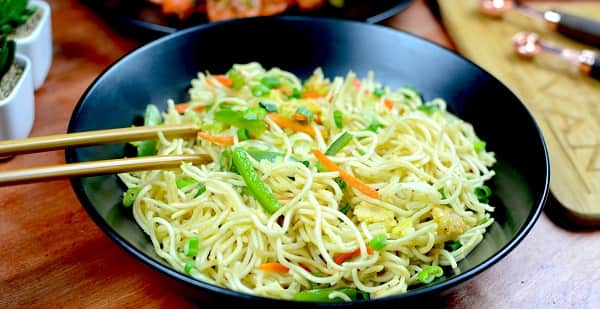
Hakka noodles are unquestionably the single most popular Chinese dish in India — the first item every Indian orders at a Chinese restaurant, the default choice at roadside Chinese stalls from Srinagar to Kanyakumari, and the dish that has introduced more Indians to Chinese-style cooking than any other. Stir-fried in a wok over intense flame with vegetables, soy sauce, vinegar, and chilli sauce, Hakka noodles deliver the distinctive slightly smoky, deeply savoury flavour that the high-heat wok technique — called the wok hei — creates in ways that home cooking cannot easily replicate.
The name comes from the Hakka people — a Chinese ethnic group that immigrated to Kolkata’s Tangra neighbourhood in the early 20th century, bringing their cooking traditions that were then adapted to local Indian ingredient availability and flavour preferences. The original Hakka noodle preparation was considerably milder — the Indian adaptation added green chillies, chilli sauce, and additional spice levels that the Indian palate demands.
Indian Hakka noodles come in three standard preparations — vegetarian with cabbage, carrot, capsicum, and bean sprouts; egg-based tossed with scrambled egg; and chicken or prawn variants for non-vegetarians. The characteristic flavour comes from the combination of soy sauce providing umami depth, vinegar adding brightness, chilli sauce delivering heat, and the high-heat wok technique creating slight char at the noodle edges that provides an almost addictive toasted quality.
Street-side versions from Indian Chinese fast food stalls — where the cook works over a specially designed high-heat Chinese burner — often deliver better Hakka noodles than more expensive restaurants precisely because the intense flame creates the authentic wok hei that lower-heat restaurant equipment fails to generate. For most Indians, the smell of noodles hitting a hot wok is one of the most appetite-stimulating aromas in all of street food culture.
2. Manchurian — India’s Own Chinese Invention
Manchurian is perhaps the most fascinatingly Indian-Chinese creation in this entire cuisine’s history — because it was invented not in China or even by a Chinese immigrant cook adapting home recipes, but by Nelson Wang, a third-generation Chinese-Indian chef at the Cricket Club of India in Mumbai in 1975. Wang, asked to create something new and different by a member, combined Chinese cooking techniques — deep frying small battered balls, then tossing in a sauce — with Indian spice sensibilities to create Chicken Manchurian. The dish has no equivalent in authentic Chinese cooking anywhere in China.
Manchurian is now available in two primary forms across India — dry Manchurian served as a starter with a thick, clingy sauce coating each piece, and gravy Manchurian served in abundant sauce as a side dish with fried rice or noodles. The Manchurian sauce itself — combining soy sauce, chilli sauce, tomato ketchup, vinegar, garlic, and ginger in a cornflour-thickened gravy — is one of Indian-Chinese cuisine’s most distinctive and most addictive flavour combinations.
Gobi Manchurian — made from deep-fried cauliflower florets coated in spiced batter — has become one of India’s most loved vegetarian dishes across all age groups and all regions, served at wedding receptions and street food corners with equal enthusiasm. The contrast between the crispy fried cauliflower exterior and the tangy, spicy Manchurian sauce creates a textural and flavour experience that makes it irresistible regardless of dietary preferences. Paneer Manchurian, mushroom Manchurian, and baby corn Manchurian follow the same preparation philosophy with different base ingredients for variation.
The Manchurian story perfectly illustrates what makes Indian-Chinese food so uniquely appealing — it takes a Chinese culinary technique (deep frying small items then tossing in sauce) and applies it with entirely Indian flavour instincts, creating something that satisfies the Indian palate’s appetite for bold, intense, heavily sauced food.
3. Fried Rice — The Perfect Indo-Chinese Comfort Food
Chinese fried rice as made in India is one of the country’s great comfort foods — a wok-tossed preparation of pre-cooked rice with vegetables, egg or protein, soy sauce, and aromatic seasonings that transforms simple leftover rice into something intensely satisfying and deeply flavourful. Like Hakka noodles, Indian fried rice preparation differs meaningfully from authentic Chinese fried rice — the Indian version uses more soy sauce, more chilli, additional vinegar, and frequently includes Indian seasonings that authentic Chinese preparations do not employ.
The fundamental technique — using day-old cold rice rather than freshly cooked rice, ensuring the wok is extremely hot before adding ingredients, working quickly to prevent steaming, and building flavour in the oil before adding the rice — is consistent with Chinese cooking principles. The flavour profile is thoroughly Indian-Chinese in its intensity and spice level.
Three fried rice variants dominate Indian Chinese restaurant menus — vegetable fried rice featuring a colourful combination of carrot, peas, capsicum, spring onion, and cabbage; egg fried rice where scrambled eggs are broken through the rice during wok tossing, adding protein and a distinctive richness; and chicken or schezwan fried rice where either tender chicken pieces or the intensely spicy Schezwan sauce (a beloved Indian adaptation of Sichuan flavours) creates the most boldly flavoured variant.
The combination of Manchurian gravy poured over fried rice — or noodles with Manchurian — is India’s most popular Chinese meal combination, served at every Chinese restaurant and fast food stall across the country as a de facto pairing that most Indians consider as natural as dal and roti.
4. Chilli Chicken — Bold, Spicy, Unmistakably Indian-Chinese
Chilli Chicken is the most unambiguously Indo-Chinese dish in this list — a preparation where marinated chicken pieces are deep fried to crispy perfection and then tossed in a vibrant sauce of green chillies, capsicum, garlic, soy sauce, and vinegar that delivers the bold, aggressive heat and tangy brightness that Indian palates love most intensely. Like Manchurian, Chilli Chicken has no direct authentic Chinese equivalent — it is a product of Indian-Chinese culinary fusion that has achieved a completely independent iconic status.
The preparation involves two distinct phases — marinating chicken in cornflour, egg, soy sauce, and spices before deep frying to create the crispy exterior that holds sauce without becoming soggy; then the sauce preparation where garlic and ginger are sautéed aggressively, fresh green chillies add heat, capsicum provides sweetness and colour, and the soy-vinegar-chilli sauce combination is tossed with the fried chicken at high heat. The final dish — whether served dry as a starter or in gravy as a main — combines crunch, heat, and the distinctive high-heat wok flavour that defines great Indo-Chinese cooking.
Chilli Paneer serves as the beloved vegetarian equivalent — applying identical preparation techniques to paneer blocks — and has become one of India’s most popular restaurant starters regardless of whether the restaurant is specifically Indian-Chinese in focus or a broader multi-cuisine establishment. The dish appears on menus from street-side stalls charging ₹80 per plate to five-star hotel restaurants charging ₹800 — its appeal transcending every price and quality tier.
5. Spring Rolls — Crispy, Satisfying, Universally Loved
Spring rolls are the Chinese food item with the strongest claim to authentic Chinese heritage on this list — versions of spring rolls exist throughout East and Southeast Asian cuisines as genuine traditional preparations. The Indian spring roll adaptation, however, has developed its own distinctive character — a crispy fried cylindrical roll filled with a spiced stir-fried vegetable mixture of cabbage, carrot, bean sprouts, and spring onion, served with a side of sweet chilli sauce or manchurian dipping sauce.
Indian spring rolls are typically more robustly spiced than their East Asian counterparts — the filling often includes ginger, garlic, and green chilli that authentic Cantonese spring rolls do not emphasise as strongly. The exterior wrapper is fried to a deep golden crunch that creates the satisfying textural contrast with the soft, savoury filling inside. When properly made — with wrappers sealed tightly to prevent oil penetration and fried in clean oil at the correct temperature — spring rolls deliver a clean, crispy bite that makes them one of the most satisfying starters in all of Indian-Chinese cuisine.
They are universally beloved across age groups — children who cannot tolerate the spice levels of Chilli Chicken or Manchurian find spring rolls perfectly approachable, while adults appreciate the familiar flavours alongside the satisfying crunch. The ubiquity of spring rolls — available as party starters, in school canteens, at street food corners, in restaurants and in frozen ready-to-fry forms at supermarkets — makes them India’s most accessible Chinese food item across every consumption context.
Why Indian-Chinese Food is So Popular in India
The extraordinary popularity of Indian-Chinese cuisine across every demographic, region, and income level in India reflects a perfect alignment between Chinese cooking techniques and Indian flavour preferences. The wok technique’s ability to create intense, complex flavours rapidly suits the Indian preference for bold, multi-dimensional taste profiles. Soy sauce and vinegar provide the umami depth and acidic brightness that complement rather than conflict with Indian spice sensibilities. The versatility of Chinese preparations — easily adapted to create vegetarian, egg, chicken, and seafood variants — serves India’s diverse dietary requirements across religious and cultural communities simultaneously.
The affordability of street-side Indian-Chinese food — where a full plate of Hakka noodles or Manchurian rice costs ₹60–₹150 — has made it one of India’s most accessible culinary pleasures, available equally to college students, working-class families, and middle-class professionals in ways that more expensive restaurant cuisine cannot match for everyday consumption.
Frequently Asked Questions (FAQs)
Q: Is Indian-Chinese food the same as authentic Chinese food?
A: No — Indian-Chinese cuisine is a distinct culinary category developed in India that uses Chinese cooking techniques with Indian spice preferences. Authentic Chinese food is considerably milder, less spicy, and uses different flavour profiles.
Q: Who invented Manchurian in India?
A: Manchurian was invented by Nelson Wang, a Chinese-Indian chef at the Cricket Club of India in Mumbai in 1975 — making it an entirely Indian-origin dish despite its Chinese cooking technique foundation.
Q: Which city is considered the home of Indian-Chinese food?
A: Kolkata’s Tangra neighbourhood — home to India’s original Chinese immigrant community — is considered the birthplace of Indian-Chinese cuisine and remains a destination for authentic Indo-Chinese food enthusiasts.
Q: Is Indian-Chinese food healthy?
A: Most Indian-Chinese preparations are deep-fried and high in sodium from soy sauce — consuming them occasionally as part of a balanced diet is fine, but frequent consumption contributes to high sodium intake and excess calorie consumption.
Q: What is the most popular Chinese dish among vegetarians in India?
A: Gobi Manchurian and Chilli Paneer are the most popular vegetarian Indian-Chinese dishes, followed closely by Veg Hakka Noodles and Veg Fried Rice — all widely available across India’s food service establishments.