Delhi’s food culture is one of the most extraordinary and most layered culinary landscapes anywhere in India — a city where centuries of Mughal imperial cooking, the food traditions of millions of Partition migrants from Punjab and the western territories, the street food genius of generations of working-class communities, and the constant culinary innovation of a cosmopolitan metropolis have combined to create something genuinely unique. No Indian city offers the same density, diversity, and sheer quality of street food and traditional cooking that Delhi delivers — from the ancient bylanes of Chandni Chowk where recipes have been refined over three and four generations to the modern food courts of Connaught Place where traditional dishes meet contemporary presentation.
Delhi’s food identity is bold, unapologetic, and deeply generous — portions are large, flavours are intense, ghee and butter are applied with confidence, and the overall philosophy treats food as celebration rather than mere sustenance. Understanding Delhi through its most famous dishes is understanding the city itself — its Mughal heritage, its Punjabi energy, its religious diversity, and the democratic street food culture that makes the most celebrated dishes available equally to billionaires and daily labourers sitting at neighbouring tables on the same pavement.
| Dish | Origin Area | Primary Flavour | Best Time to Eat | Price Range |
| Chole Bhature | Paharganj / Old Delhi | Spicy, tangy, rich | Breakfast / Brunch | ₹50–₹200 |
| Butter Chicken | Daryaganj (Moti Mahal) | Creamy, mildly spiced, tomato-rich | Lunch / Dinner | ₹200–₹600 |
| Paranthe Wali Gali Paranthas | Chandni Chowk | Rich, buttery, stuffed | Breakfast / Lunch | ₹60–₹150 |
| Daulat Ki Chaat | Old Delhi (seasonal) | Ethereally light, sweet, delicate | Morning only — winter | ₹30–₹80 |
| Kebabs — Seekh and Galouti | Old Delhi / Nizamuddin | Smoky, spiced, melt-in-mouth | Evening / Dinner | ₹100–₹500 |
1. Chole Bhature — Delhi’s Definitive Breakfast
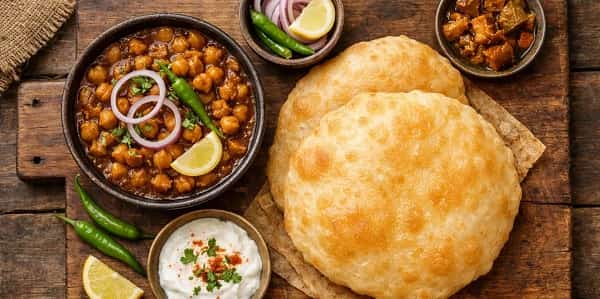
If Delhi has one single dish that defines its food soul completely — one preparation that captures the city’s boldness, its generosity, its Punjabi energy, and its absolute conviction that food should be deeply satisfying — it is Chole Bhature. Two enormous, golden, puffed-up deep-fried bread rounds served alongside a dark, intensely spiced chickpea curry that has been cooking since the previous evening — garnished with sliced onion, green chilli, pickle, and a squeeze of lemon — this is Delhi’s definitive breakfast and one of India’s most celebrated regional dishes.
The chole of a great Delhi chole bhature is not the simple chickpea preparation found elsewhere in India. Delhi’s chole is a deeply complex curry — chickpeas soaked overnight and cooked with tea bags or amla to achieve the characteristic dark colour, then simmered for hours with a masala that typically includes dried pomegranate seeds (anardana), dried mango powder (amchur), black cardamom, bay leaves, and a spice blend whose specific proportions represent the generational secret of each establishment. The result is a curry with layers of flavour — sour, spicy, savoury, slightly sweet — that improves with time and achieves its peak at the morning service that serious Delhi food lovers make deliberate plans to attend.
The bhature — leavened with curd and baking powder, rested overnight for maximum fermentation, and deep-fried in clean oil to puff dramatically — should be served immediately, collapsing from its dramatic balloon form as you tear the first piece. Old Delhi’s Sita Ram Diwan Chand in Paharganj, operating since 1948, and the legendary Natraj Dahi Bhalle Wala in Chandni Chowk are among Delhi’s most celebrated chole bhature destinations — where morning queues form before opening and the regulars arrive with the devotion of pilgrims.
2. Butter Chicken — Delhi’s Most Famous Global Export
Delhi gave the world butter chicken — the dish that has become the most internationally recognised symbol of Indian cuisine globally, served in Indian restaurants from London to Tokyo to São Paulo, beloved by people who have never visited India and recognised as distinctly Indian even by people with limited knowledge of Indian food. The origins of butter chicken trace specifically to Moti Mahal restaurant in Daryaganj, Old Delhi, where founder Kundan Lal Gujral and his associate Kundan Lal Jaggi are credited with creating the dish in the 1950s — combining leftover tandoori chicken pieces with a buttery tomato-cream sauce that transformed the rather austere flavours of the original tandoor-cooked chicken into something luxuriously approachable.
Delhi’s butter chicken — the authentic version — achieves a balance of flavours that its many imitations fail to capture. The tomato base is roasted and reduced to concentrate sweetness. Butter and cream are added with genuine generosity rather than the measured restraint that calorie-conscious recreations employ. Specific spices including Kashmiri red chilli powder that provides deep colour without excessive heat, cardamom, and dried fenugreek leaves (kasuri methi) added at the end create the characteristic aroma that distinguishes a properly made butter chicken from its diluted counterparts.
The tandoori chicken component — marinated in curd and spices before being cooked in the intense heat of a clay tandoor oven — provides the charred, smoky quality that distinguishes butter chicken from simple tomato-cream chicken curries. The smoky char of tandoori cooking interacting with the rich, slightly sweet tomato sauce creates the flavour paradox that makes butter chicken simultaneously comforting and complex.
Moti Mahal Delux in Daryaganj remains Delhi’s most historically significant butter chicken destination. Numerous other Delhi establishments have developed their own celebrated versions over seven decades — making butter chicken exploration a genuine food pilgrimage across different Delhi neighbourhoods.
3. Paranthe Wali Gali — Chandni Chowk’s Living Food History
In the dense labyrinth of Chandni Chowk’s ancient bazaars exists a narrow lane — Paranthe Wali Gali — that has been dedicated entirely to stuffed paranthas for over 150 years, operated by families whose parantha-making lineage extends through multiple generations of the same family names. This is not simply a food destination but a living museum of Delhi’s culinary heritage — where traditional preparations made in exactly the manner of great-grandparents are consumed daily by visitors who travel specifically for this experience.
Delhi’s stuffed parantha culture reaches its highest expression in this legendary lane. The parantha itself — unleavened whole wheat dough rolled, stuffed, folded, and cooked on a heavy iron tawa with generous ghee applications — is a masterclass in simple technique achieving extraordinary results. What elevates Paranthe Wali Gali beyond ordinary stuffed paranthas is both the extraordinary variety of fillings and the quality of accompaniments that transform each parantha into a complete, deeply satisfying meal.
Fillings range from the classic aloo (spiced potato) and gobhi (spiced cauliflower) to more unusual preparations including kairi (raw mango), keema (minced meat), rabri (sweet thickened milk), and seasonal vegetable fillings that change with harvest availability. Each parantha arrives at the table glistening with ghee, accompanied by a dal makhani, a seasonal vegetable sabzi, house-made pickles, and a cooling yoghurt preparation — the complete accompaniment set transforming a simple flatbread into a feast.
The physical experience of eating in Paranthe Wali Gali — seated on traditional wooden seating in cramped, centuries-old establishments where the cooking happens in full view and the smells of ghee-bathed paranthas hitting a hot tawa fill the narrow lane — is as much the attraction as the food itself. This is Delhi eating with full historical consciousness.
4. Daulat Ki Chaat — Old Delhi’s Most Ethereal Creation
Daulat Ki Chaat is Delhi’s most mysterious, most ephemeral, and most poetically beautiful street food — a preparation so completely unlike anything else in Indian culinary tradition that first-time encounters typically produce expressions of pure bewilderment at how something so impossibly light, so delicate, and so complex can be made from ingredients as simple as milk, cream, and morning dew. This is Old Delhi’s most celebrated winter delicacy — available only from November through February, sold only in the mornings before the product literally evaporates in Delhi’s warming afternoon temperatures.
The preparation of Daulat Ki Chaat requires beginning before dawn — fresh whole milk and cream are whisked and aerated through a labour-intensive process of collecting morning dew and working the mixture in the cold night air for hours, building an impossibly light foam that has the structural integrity of a cloud and the flavour of the richest, most delicate cream you have ever tasted. The foam is served in small clay cups or on a flat surface, topped with powdered sugar, dried fruits, saffron, and mawa (dried milk solids) — the entire arrangement dissolving on the tongue within seconds of contact.
The name “Daulat” means wealth or treasure in Urdu — entirely appropriate for a preparation that requires such extraordinary skill, such specific climatic conditions, and such ephemeral existence. Eating Daulat Ki Chaat in Old Delhi’s winter mornings, purchased from a vendor who has been awake since 3 AM preparing it, is one of the most genuinely unique and irreplaceable food experiences that any Indian city offers.
5. Delhi Kebabs — Seekh, Galouti, and Kakori
Delhi’s kebab tradition represents the most direct culinary inheritance from the Mughal imperial cooking that defined northern Indian food culture for centuries — preparations that were developed to meet the specific requirements of Mughal emperors, refined by generations of ustads (master chefs) competing for royal patronage, and then gradually democratised through the kebab shops and dhabas of Old Delhi and Nizamuddin that brought these aristocratic preparations to the streets.
Seekh Kebab is Delhi’s most widely available and most beloved everyday kebab — minced meat, typically lamb or chicken, combined with spices, fresh coriander, ginger, garlic, and green chilli, formed around a flat iron skewer and cooked in the intense heat of a charcoal fire that imparts the smoky char that defines great seekh kebab. The texture should be juicy but firm, the exterior slightly charred, and the interior still moist — achieving this balance requires both quality meat and the skill of knowing exactly when to remove from heat.
Galouti Kebab represents Delhi kebab culture at its most refined and most historically fascinating — a preparation specifically created according to culinary legend for a Lucknow nawab who had lost his teeth but refused to surrender his love of minced meat kebabs. The solution was a preparation so finely processed and so meticulously spiced that the kebab literally melts on the tongue without requiring any chewing whatsoever. Raw papain enzyme from green papaya is the secret tenderising agent that breaks down protein structures completely — combined with up to 160 different spices in some traditional recipes, Galouti Kebab is Indian cooking’s most complex single preparation.
Kakori Kebab — developed in Kakori near Lucknow but deeply embedded in Delhi’s Muslim culinary heritage areas including Matia Mahal and Jama Masjid neighbourhood — represents the seekh format applied with a lighter, more delicate spice hand and the same melt-in-mouth texture that distinguishes Awadhi refinement from robust Punjabi cooking styles.
The Experience of Eating in Delhi
The most important thing to understand about Delhi’s famous foods is that they cannot be fully experienced through restaurant recreations alone — they must be eaten in their original contexts to understand what makes them genuinely extraordinary. Chole Bhature eaten standing on the pavement outside Sita Ram at 8 AM, butter chicken at Moti Mahal’s original Daryaganj location, Daulat Ki Chaat purchased from an Old Delhi vendor on a January morning, paranthas in Paranthe Wali Gali’s ancient establishments, and seekh kebabs from a Jama Masjid area grill after Friday evening prayers — these contextual experiences are inseparable from the food’s meaning and quality.
Frequently Asked Questions (FAQs)
Q: Which is the most famous food of Delhi?
A: Chole Bhature and Butter Chicken are Delhi’s two most globally recognised iconic dishes — both originated in Delhi and both represent the city’s food culture distinctively.
Q: Where is the best place to eat famous Delhi food?
A: Chandni Chowk and Old Delhi’s Jama Masjid area are the primary destinations for authentic traditional Delhi food — Paranthe Wali Gali, Karim’s, and Al Jawahar are landmark establishments.
Q: When can I eat Daulat Ki Chaat in Delhi?
A: Daulat Ki Chaat is available only during winter months — November through February — and only in the mornings before temperatures rise. It is exclusively found in Old Delhi’s traditional street food areas.
Q: Is Delhi food very spicy?
A: Delhi food tends toward bold, robust flavours — moderately to strongly spiced. Street food like chole bhature is assertively spiced while preparations like butter chicken are milder and cream-balanced.
Q: What is the best time to explore Delhi’s food culture?
A: Winter months from October through February offer the most complete Delhi food experience — comfortable temperatures for street food exploration and the seasonal availability of special preparations including Daulat Ki Chaat.